Personal Finance

Personal finance refers to the management of an individual’s financial resources and decisions regarding money matters. It involves various aspects of managing income, expenses, savings, investments, and debt with the aim of achieving financial stability, security, and long-term goals.

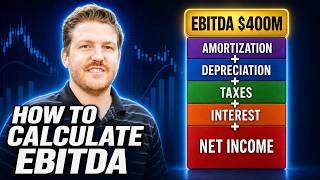
What is EBITDA? Explained Simply With Examples

In this video, I break down EBITDA — earnings before interest, taxes, depreciation, and amortization — one of the most widely used and most frequently misunderstood numbers in all of finance. You’ll learn exactly what EBITDA means, how it differs from the bottom-line net income at the foot of an income statement, and why it aims to capture the profit a business generates from its core operations before financing and accounting choices come into play. I walk through the full calculation with real numbers — starting at one billion dollars in revenue and working down a simplified income statement to a four hundred million dollar EBITDA — then show the add-back method analysts use to reach the same figure from net income or EBIT. I also cover why EBITDA deliberately stops before interest, taxes, depreciation, and amortization — how debt loads and tax rates can make two otherwise identical businesses look very different, why depreciation and amortization are non-cash charges that get added back, and why investors reach for EBITDA to compare companies that are financed, taxed, and equipped differently. Then I get into where EBITDA is genuinely useful — capital-intensive industries like telecom, manufacturing, and energy, and companies being evaluated for acquisition — along with its real blind spots, including the cash it still takes to replace equipment, the working capital and interest it ignores, how “adjusted EBITDA” can be stretched, why it breaks down for banks, and why it should never be mistaken for cash flow. Whether you’re analyzing a company, comparing two businesses side by side, or preparing for a finance interview, this video gives you everything you need to understand how EBITDA really works — and where it can mislead you.

*Wharton & Wall Street Prep Private Equity (PE) — Up to $500 Off with code RYANOC* https://ryano.finance/wharton-pe

Chapters
0:00 – Introduction
0:26 – What is EBITDA?
0:47 – From Revenue to Net Income
1:42 – The Add-Back Method
2:14 – Why EBITDA Strips Out Financing, Taxes & D&A
3:18 – Why Investors Use EBITDA
3:33 – Blind Spots & Where EBITDA Fits

🎓 *Other Ivy League Certificate Programs by Wall Street Prep — Up to $500 Off with code RYANOC*
1. Columbia & Wall Street Prep AI for Business & Finance: https://ryano.finance/columbia-ai
2. Wharton & Wall Street Prep Real Estate Investing & Analysis: https://ryano.finance/wharton-real-estate
3. Wharton & Wall Street Prep Financial Planning & Analysis (FP&A): https://ryano.finance/wharton-fpa
4. Wharton & Wall Street Prep Value Investing: https://ryano.finance/wharton-avi
5. Wharton Restructuring & Distressed Investing Certificate: https://ryano.finance/wharton-rdi

*Disclosure: This is not financial advice and should not be taken as such. The information contained in this video is an opinion. Some of the information could be wrong. This channel is owned and operated by Portfolio Constructs LLC. Some of the links above are affiliate links, meaning, at no additional cost to you, I will earn a commission if you click through and make a purchase.

What Is a Leveraged Buyout (LBO)? How PE Firms Use Debt

In this video, I break down the leveraged buyout (LBO), the strategy private equity firms use to acquire companies mostly with borrowed money. You’ll learn exactly what an LBO is, how the purchase is financed with a mix of roughly 20 to 40 percent equity and 60 to 80 percent debt, and how the acquired company’s own cash flows are used to pay that debt down. I walk through a complete worked example with real numbers — showing how buying a company for $100 million and selling it for $150 million can turn a 50 percent unleveraged return into a 200 percent leveraged return, and how that same leverage can wipe out your entire stake when a deal goes the other way. I also cover how a typical deal unfolds from acquisition to exit, what makes an ideal LBO target, and the key limitations and criticisms every investor should understand — from heavy debt loads to the charge that some deals favor financial engineering over genuine value creation. Whether you’re preparing for a finance role or just want to understand how private equity really makes money, this video gives you everything you need to understand how leveraged buyouts work.

*Wharton & Wall Street Prep Private Equity (PE) — Up to $500 Off with code RYANOC* https://ryano.finance/wharton-pe

Chapters
0:00 – Introduction
0:19 – What Is a Leveraged Buyout?
0:45 – How the Deal Is Financed (Debt vs. Equity)
1:07 – How an LBO Deal Works
1:40 – How Leverage Amplifies Returns
2:24 – The Risks of Leverage
3:05 – What Makes an Ideal LBO Target
3:29 – Limitations & Key Takeaways

🎓 *Other Ivy League Certificate Programs by Wall Street Prep — Up to $500 Off with code RYANOC*
1. Columbia & Wall Street Prep AI for Business & Finance: https://ryano.finance/columbia-ai
2. Wharton & Wall Street Prep Real Estate Investing & Analysis: https://ryano.finance/wharton-real-estate
3. Wharton & Wall Street Prep Financial Planning & Analysis (FP&A): https://ryano.finance/wharton-fpa
4. Wharton & Wall Street Prep Value Investing: https://ryano.finance/wharton-avi
5. Wharton & Wall Street Prep Restructuring & Distressed Investing: https://ryano.finance/wharton-rdi

*Disclosure: This is not financial advice and should not be taken as such. The information contained in this video is an opinion. Some of the information could be wrong. This channel is owned and operated by Portfolio Constructs LLC. Some of the links above are affiliate links, meaning, at no additional cost to you, I will earn a commission if you click through and make a purchase.

Dollar-Cost Averaging Explained | Better Than Timing the Market?

In this video, I break down dollar-cost averaging (DCA), a simple investing strategy that removes the guesswork of trying to time the market. You’ll learn exactly what DCA is, how it works mechanically, and why investing a fixed amount at regular intervals can protect you from buying at the worst possible moment. I walk through a practical example with real numbers showing how DCA affects your average cost per share, and I explain the research behind why most investors fail at market timing — including the shocking stat that missing just the 10 best days over 30 years cuts your returns in half. I also cover DCA vs lump sum investing, including when each strategy makes sense and what the Vanguard research actually shows. Plus, I address the limitations of DCA that every investor should understand, including why it doesn’t guarantee profits and when lump sum investing might be the better choice. Whether you’re a new investor looking for a stress-free way to build wealth or you’re sitting on a lump sum trying to decide how to invest it, this video gives you everything you need to understand dollar-cost averaging.

Chapters
0:00 – The Cost of Market Timing
0:23 – What is Dollar-Cost Averaging?
0:59 – How DCA Works (With Example)
1:59 – DCA Limitations
2:10 – Why Timing the Market Fails
2:42 – DCA vs Lump Sum Investing
3:23 – Key Takeaways

*Seeking Alpha Deals:*
💰 *Get $50 OFF Alpha Picks:* https://ryano.finance/alpha-picks
📈 *Get $159 OFF Seeking Alpha Premium and Alpha Picks Bundle:* https://ryano.finance/seeking-alpha-bundle
🔥 *Get $30 OFF Seeking Alpha Premium:* https://ryano.finance/seeking-alpha

🎓 *Get 25% Off CFA Courses (Featuring My Videos!) — Use code RYAN25 here:*
👉 https://ryano.finance/cfa

🎓 *Ivy League Certificate Programs by Wall Street Prep — Save up to $500 with codes RYAN or RYAN300:*
1. Columbia & Wall Street Prep AI for Business & Finance: https://ryano.finance/columbia-ai
2. Wharton & Wall Street Prep Real Estate Investing & Analysis: https://ryano.finance/wharton-real-estate
3. Wharton & Wall Street Prep Private Equity (PE): https://ryano.finance/wharton-pe
4. Wharton & Wall Street Prep Financial Planning & Analysis (FP&A): https://ryano.finance/wharton-fpa
5. Wharton & Wall Street Prep Value Investing: https://ryano.finance/wharton-avi

*Get 10% Off Snowball Analytics to help manage your portfolio with code RYAN here:*
https://snowball-analytics.com/register/ryan

*Disclosure: This is not financial advice and should not be taken as such. The information contained in this video is an opinion. Some of the information could be wrong. This channel is owned and operated by Portfolio Constructs LLC. Some of the links above are affiliate links, meaning, at no additional cost to you, I will earn a commission if you click through and make a purchase.

Compound Interest Explained for Beginners | The Math Behind Building Real Wealth

In this video, I break down compound interest explained simply for beginners — the most powerful force in investing. You’ll learn what is compound interest, how compound interest works, and why the power of compound interest is the key to building long-term wealth. I walk through the compound interest formula with real numbers and show you the compound interest math behind how to calculate compound interest step by step. I compare two investors to prove why starting early matters more than investing more in compound interest investing, and I show you the Rule of 72, a simple shortcut for compound interest calculation to estimate how fast your money doubles. I also cover the dark side of compounding that works against you with debt. Whether you’re looking for compound interest explained for beginners or want to understand compound interest investment strategies, this video gives you everything you need to harness compound interest for real wealth.

Chapters:
0:00 – The Penny That Doubles Every Day
0:30 – What is Compound Interest?
0:54 – The Compound Interest Formula
1:13 – Calculation Example
1:31 – Why Starting Early Beats Investing More
2:13 – The Rule of 72
2:37 – Compound Interest & Debt
3:04 – Key Takeaways

*Seeking Alpha Deals:*
💰 *Get $50 OFF Alpha Picks:* https://ryano.finance/alpha-picks
📈 *Get $159 OFF Seeking Alpha Premium and Alpha Picks Bundle:* https://ryano.finance/seeking-alpha-bundle
🔥 *Get $30 OFF Seeking Alpha Premium:* https://ryano.finance/seeking-alpha

🎓 *Get 25% Off CFA Courses (Featuring My Videos!) — Use code RYAN25 here:*
👉 https://ryano.finance/cfa

🎓 *Ivy League Certificate Programs by Wall Street Prep — Save up to $500 with codes RYAN or RYAN300:*
1. Columbia & Wall Street Prep AI for Business & Finance: https://ryano.finance/columbia-ai
2. Wharton & Wall Street Prep Real Estate Investing & Analysis: https://ryano.finance/wharton-real-estate
3. Wharton & Wall Street Prep Private Equity (PE): https://ryano.finance/wharton-pe
4. Wharton & Wall Street Prep Financial Planning & Analysis (FP&A): https://ryano.finance/wharton-fpa
5. Wharton & Wall Street Prep Value Investing: https://ryano.finance/wharton-avi

*Get 10% Off Snowball Analytics to help manage your portfolio with code RYAN here:*
https://snowball-analytics.com/register/ryan

*Disclosure: This is not financial advice and should not be taken as such. The information contained in this video is an opinion. Some of the information could be wrong. This channel is owned and operated by Portfolio Constructs LLC. Some of the links above are affiliate links, meaning, at no additional cost to you, I will earn a commission if you click through and make a purchase.

Explore Top Finance Certificates

Access official certificates from Wharton Online & Columbia Business School Executive Education, powered by Wall Street Prep. Save up to $500 with code RYAN.

Contact Me

Feel free to reach out to discuss your freelance project needs, and let’s collaborate on bringing your vision to life!

Contact Me

Have a question or want to work together? Fill out the form below and we’ll get back to you as soon as possible.

Contact Form Demo

This site is protected by reCAPTCHA and the Google Privacy Policy and Terms of Service apply.