Start here
3 articles · 47 min
-
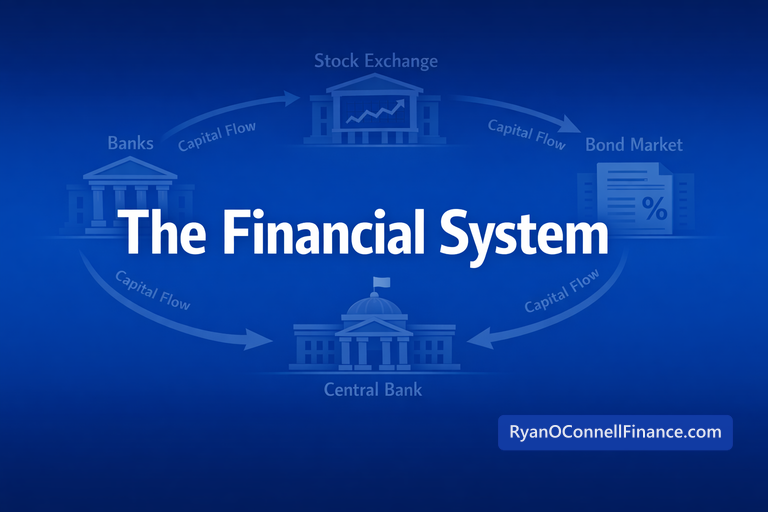
The Financial System: Markets, Intermediaries & Regulation
Learn how the financial system channels funds from savers to borrowers through financial markets and intermediaries, including direct vs indirect finance…
-
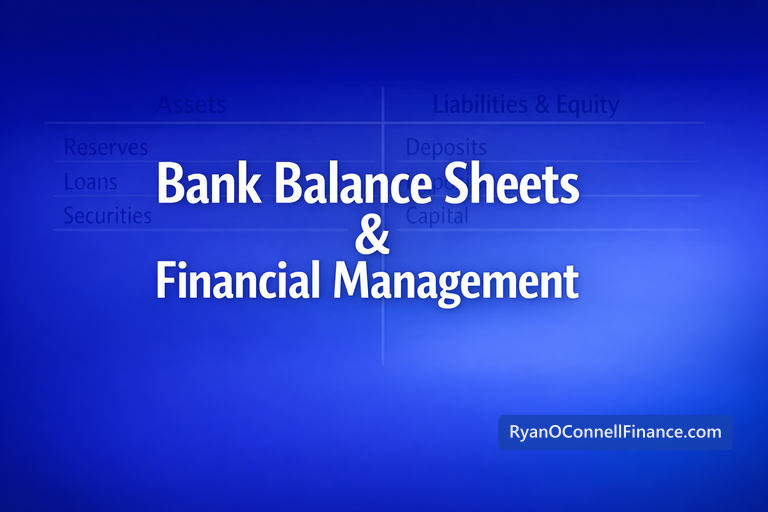
Bank Balance Sheets & Financial Management: Liquidity, Assets & Liabilities
Learn how banks manage their balance sheets — assets, liabilities, capital, and profitability. Covers ROA, ROE, NIM, liquidity management, and the asset…
-
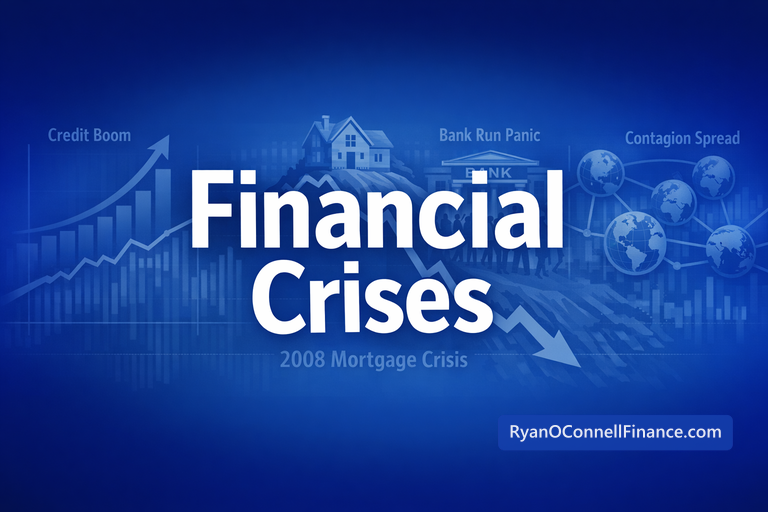
Financial Crises: Causes, Dynamics & the 2007-2009 Global Financial Crisis
Learn how financial crises unfold — from credit booms and asset bubbles to banking panics and debt deflation. Includes a detailed analysis of the 2007-2009…
Money, Banking & the Financial System
11 parts · 3 hours
Asymmetric Information: Adverse Selection, Moral Hazard & the Lemons Problem
Asymmetric information creates adverse selection and moral hazard — the two problems that explain why banks dominate corporate lending, why collateral…
Bank Credit Risk Management: Screening, Monitoring & Off-Balance-Sheet Activities
Learn how banks manage credit risk through screening, monitoring, relationship banking, loan commitments, collateral, credit rationing, and off-balance-sheet…
Financial Regulation & Deposit Insurance: Why Banks Are Regulated
Learn why banks are regulated, how FDIC deposit insurance works, the moral hazard it creates, the too-big-to-fail problem, and the regulatory toolkit including…
Basel Capital Requirements: Basel I, II & III Framework
Understand the Basel capital framework — Basel I, II & III — including risk-weighted assets, CET1 ratios, leverage ratios, and liquidity requirements…
Banking Industry Structure: Commercial vs Investment Banking, Shadow Banking and Fintech
Understand the structure of modern banking from Glass-Steagall and the separation of commercial and investment banking to shadow banking, securitization…
The Great Depression: Bank Panics, Policy Failures & Lessons Learned
The Great Depression (1929-1933) was caused by cascading bank panics, Federal Reserve policy failures, and a debt deflation spiral that turned a recession…
Emerging Market Financial Crises: Currency, Banking & Sovereign Debt Crises
Learn how emerging market financial crises unfold through twin crises, speculative attacks, and sudden stops — with case studies of Mexico 1994, Asia 1997…
The International Monetary System: Gold Standard, Bretton Woods & Managed Float
Learn how the international monetary system evolved from the gold standard through Bretton Woods to the managed float.
The European Monetary Union & the Euro: Benefits, Costs & Sovereign Debt Crisis
Learn about the European Monetary Union, optimal currency area theory, the Maastricht criteria, ECB structure, benefits and costs of the euro, and the European…
Monetary Policy Transmission Mechanisms: How Interest Rates Affect the Economy
Learn how monetary policy reaches the real economy through interest rate, asset price, credit, exchange rate, and expectations channels — and why transmission…
Digital Payment Systems & CBDCs: From Electronic Rails to Central Bank Digital Currency
Learn how central bank digital currencies (CBDCs) work, how they compare to stablecoins and cryptocurrency, and what they mean for banking and monetary policy.
Risk Management at Financial Institutions
1 part · 11 min
Basel Liquidity Ratios: LCR & NSFR Explained From Financial Risk Management
The Liquidity Coverage Ratio (LCR) and Net Stable Funding Ratio (NSFR) are Basel III regulatory standards that require banks to maintain adequate liquid assets…
More articles
6 articles · 1 hour
Money Supply Measures: M0 to M4
Compare money supply measures from M0 to M4, including U.S. M1 and M2, euro-area M3, U.K. M4, and the definition changes that affect monetary statistics.
Quantitative easing explained: how bond purchases create reserves, affect long-term yields, and differ from rate cuts, tapering, and quantitative tightening.
South Sea Bubble: The 1720 Crash
Explore the South Sea Bubble of 1720: how government debt, installment subscriptions, credit and political corruption fueled the boom, crash and its aftermath.
The Mississippi Bubble of 1720
Explore the Mississippi Bubble of 1720: John Law’s debt conversion, banknotes, share-price support, collapse, and the lessons for financial credibility.
Why Did the Gold Standard End?
Why did the gold standard end? Learn what Nixon changed in 1971, why Bretton Woods broke down, and what restoring dollar-gold convertibility would require.
Why Does the Fed Target 2% Inflation? From Economics
Why does the Fed target 2% inflation instead of zero? Explore interest-rate room, deflation risk, wage adjustment, measurement limits, and the target’s history.
Tools for this topic
- Adverse Selection & Lemons Market CalculatorFree online calculator Excel model: Adverse Selection & Lemons Market Calculator
- Bank Balance Sheet & Profitability CalculatorFree online calculator Excel model: Bank Balance Sheet & Profitability Calculator
- Bank Capital Adequacy Ratio CalculatorFree online calculator Excel model: Bank Capital Adequacy Ratio Calculator
- Currency Crisis CalculatorFree online calculator Excel model: Currency Crisis Calculator
- Financial Crisis Indicator DashboardFree online calculator Excel model: Financial Crisis Indicator Dashboard
- Interest Rate Gap & Duration Gap CalculatorFree online calculator Excel model: Interest Rate Gap & Duration Gap Calculator
Browse other topics
Professional certificates
Explore Top Finance Certificates
Access official certificates from Wharton Online & Columbia Business School Executive Education, powered by Wall Street Prep. Save up to $500 with my exclusive discount code: